

















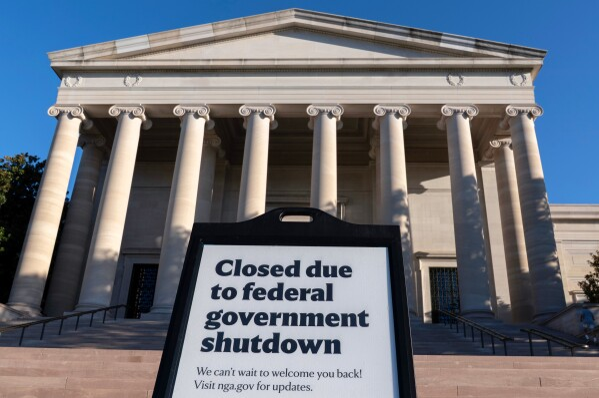
What is a government shutdown? It’s a lapse in funding for federal government operations when Congress fails to pass appropriations bills or a continuing resolution (CR) by the deadline. During a shutdown, non-essential government employees are sent home and essential government employees work without pay. Congress was supposed to approve a bill to fund the government by October 1st. There have been 11 total government shutdowns, 4 of which have been major. This most recent shutdown has been the longest shutdown in all of American history, lasting 44 days from the start of October 1st to November 12th. The disagreements between Republicans and Democrats focused mostly on healthcare costs.
The government shutdown affected nearly everyone while it was going on. People working in national parks, food safety workers, and mortgage and loan processors were brought to a full stop. All non-essential employees were placed on mandatory unpaid leave–an estimated 900,000 people. Meanwhile, essential personnel had to work without pay. Essential workers are involved with national defense, law enforcement, or the protection of life and property. This includes active-duty military personnel, federal law enforcement officers, and air traffic controllers. Air traffic controllers are the people at airports who talk to pilots, telling them when to leave, what the weather is like, and where to fly. Without them being paid, it was only a matter of time before flights started getting delayed and canceled. It is estimated by the Congressional Budget Office that the shutdown cost our economy $11 billion.
One of the worst effects of the shutdown was that SNAP (Supplemental Nutrition Assistance Program) was suspended. SNAP provides food to low-income individuals and families. It is government-funded, so that means during the shutdown, many lost access to food. It also affected those trying to get passports or student loans. Congress must pass funding by January 30, 2026, or the government could shut down again.